New Construction vs Resale in Buford: Which Path Fits Your Move?
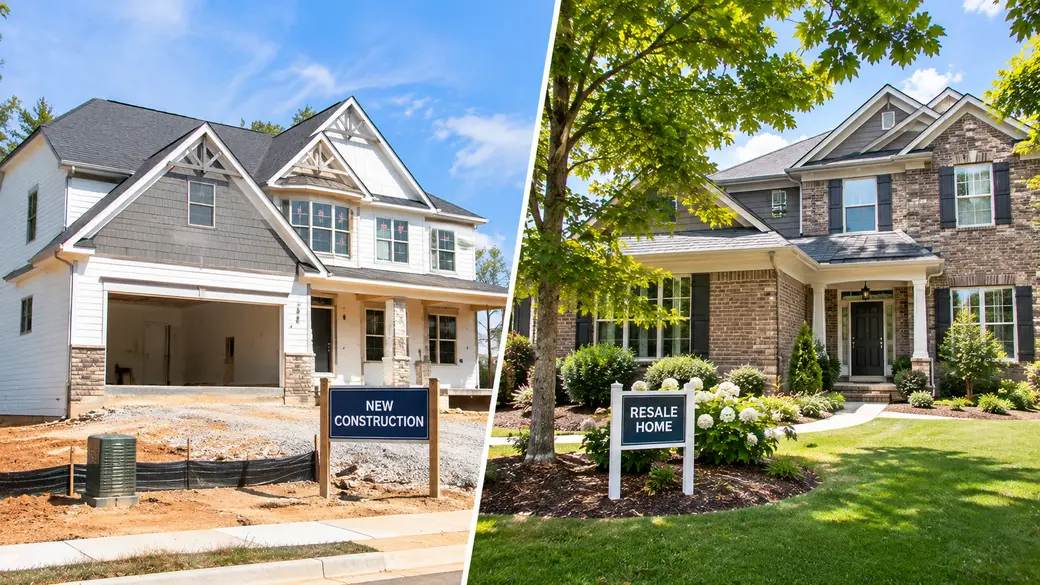
New Construction vs Resale in Buford, GA comes down to a practical trade-off: new homes can offer current layouts and lower early maintenance needs, while resale homes can offer established settings and a clearer view of the finished property. For move-up buyers, neither path is automatically better. The stronger choice depends on your target move date, total budget beyond the contract price, location priorities, and willingness to make selections before closing.
New Construction vs Resale: The Quick Version
- Typical price gap: New construction can carry a premium for newer systems, current finishes, and selected upgrades, while resale pricing varies more by location, lot, age, condition, and renovations.
- Closing timeline: Completed new homes can follow a standard purchase schedule, while a to-be-built home requires a longer timeline tied to construction progress.
- Customization: New construction offers the most flexibility before selection deadlines, while resale changes generally happen after closing.
- Warranty coverage: New homes may include limited builder and manufacturer coverage, while resale homes may have transferable coverage only if it remains in effect.
- Negotiation room: Builders may focus concessions on financing help or upgrades, while resale sellers may have flexibility on price, timing, or included items.
Buford Housing Context
Buford is a city in Gwinnett County, with a small portion in Hall County, and its 30518 and 30519 mailing areas reach well beyond city limits.
| Metric | Recent reading |
|---|---|
| Median sale price (12 months through September 2026) | About $475,000 |
| Typical recently sold home | About 2,780 square feet, built around 2006 |
| New construction share of recent sales | About 8% |
| Active listings (November 2026) | 581, averaging about $727,000 |
These figures provide context for comparing newer homes with established inventory. Most of what sells in Buford is resale, but new construction remains a meaningful option for move-up buyers.
How the Buford New Construction Market Works
Buford's new-construction market is best suited to buyers who can choose between completed inventory and homes still moving through the build process. Completed homes can provide a more predictable route to closing, while earlier-stage homes may offer more choices in finishes, layouts, and structural features.
Move-up buyers may encounter detached homes, townhomes, and planned-community options with homeowner association rules and shared amenities. The advertised base price is only a starting point. Lot premiums, elevations, structural selections, cabinetry, flooring, appliances, lighting, and outdoor features can materially change the final contract price.
Build timing depends on the home's stage when a buyer signs. A finished or near-finished home can often proceed on a standard purchase timeline. A home still under construction can be affected by permitting, weather, material availability, and construction sequencing. Buyers should ask which selections remain available, what completion window is written into the contract, and which features are included without additional cost.
Builder incentives can be meaningful when they reduce a buyer's overall borrowing or closing expenses. Common offers may include closing-cost credits, temporary rate reductions, or selected design upgrades, particularly when financing is arranged through a preferred lender. Compare the full loan terms, lender fees, required cash, and final sales price before assigning a value to an incentive package. Our Buford market report can help frame those comparisons.
What Resale Homes Look Like in Buford Right Now
Resale homes in Buford offer a more complete view of the property, lot, streetscape, and surrounding neighborhood before a buyer commits. The typical recently sold home was built around 2006, which means resale options can range from relatively recent homes to properties with mature landscaping, established streets, and systems that may be closer to replacement age.
For move-up buyers, resale can be especially appealing when lot size, street setting, or a completed neighborhood matters more than selecting finishes. Buyers can evaluate room sizes, storage, outdoor space, traffic patterns, and nearby activity instead of relying on a model home or future community plan. This makes side-by-side comparisons easier when several homes have different levels of updating.
Condition remains central to the resale value equation. Roof age, HVAC condition, water-heater age, drainage, windows, prior renovations, and routine maintenance can shape the budget after closing. A well-maintained resale home may be a practical alternative to new construction when its location and layout better match a household's daily routine.
Competition can vary substantially from one home to another. Well-presented properties in sought-after settings may attract quick attention, while homes with dated finishes, deferred maintenance, or unusual layouts can create more room for negotiation. Buyers should evaluate each property on its condition, pricing, and seller timeline rather than assuming every resale opportunity follows the same pattern.
New Construction vs Resale in Buford: Head-to-Head Comparison
New Construction vs Resale in Buford differs most in how buyers balance timing, location certainty, customization, and near-term ownership costs.
| Consideration | New Construction | Resale |
|---|---|---|
| Typical price range in Buford | Varies by builder, plan, lot, included features, and upgrades | Varies by age, condition, lot, location, and renovations |
| Time to close | Standard purchase timing for completed homes; longer for homes still being built | Often follows a standard purchase timeline |
| Ability to customize finishes | Greater before builder selection deadlines | Usually handled after closing |
| Builder or home warranty | May include limited builder and manufacturer coverage | May include transferable manufacturer coverage, if any remains |
| HOA fees likelihood | Common in planned communities | Varies by neighborhood and property type |
| Property tax basis | May change after completion and county assessment | Based on assessed value and applicable local rules |
| Negotiation room | Often focused on financing help, credits, or upgrades | May include price, timing, concessions, or included items |
| Immediate move-in availability | Strongest with completed inventory | Available when the transaction closes |
The Real Cost Difference in Buford
The real cost difference in Buford is broader than the contract price. New construction can cost more upfront because the buyer is paying for unused systems, current layouts, and selected finishes. The base price should be treated as a starting point, not as the complete ownership budget.
Lot premiums, cabinetry, countertops, flooring, appliances, lighting, outdoor living features, and design packages can raise the final price. The most consequential decisions are often structural: additional bedrooms, bathrooms, covered patios, storage, electrical preparation, or floor-plan changes. Those features can be costly or difficult to add after closing.
Cosmetic selections deserve a more cautious approach. Flooring, lighting, paint colors, hardware, and some appliance upgrades can often be changed later. Buyers should focus first on features that improve how the home works for their household, then decide whether premium finishes are worth the added cost.
Resale homes create a different calculation. A lower initial price may leave more room for updates, but buyers should reserve funds for maintenance and improvements. Older roofs, HVAC equipment, windows, and water heaters can affect ownership costs even when a home's location and layout are strong.
HOA dues also deserve a side-by-side comparison, particularly in newer planned communities with amenities or common-area maintenance. Property taxes should be modeled using current county information and the property's likely assessed value, rather than relying only on a prior owner's bill or an early builder estimate. Gwinnett County assesses property at 40% of fair market value, and its 2026 total county rate for unincorporated properties is 14.71 mills before school and city levies.
Pro-Tip: Flexibility is often the most effective negotiating lever in Buford. A buyer who can work with a builder's preferred closing window may have stronger leverage for financing help or a targeted upgrade, while a resale buyer with clear timing can present a more compelling offer.
Financing New Construction and Resale in Buford
Financing diverges most when a new home will not be ready for several months. A completed new home can generally use a standard purchase loan, while a longer build timeline requires careful coordination of deposits, loan approval, rate-lock timing, and final completion.
Builder-preferred lenders may offer credits, temporary rate reductions, or upgrade allowances. Those incentives can be valuable, but buyers should compare them with another written loan estimate that includes the interest rate, lender fees, required cash, and projected payment. The largest advertised credit is not always the lowest total borrowing cost.
Longer construction timelines can also make rate-lock planning more important. The national 30-year fixed average moved from 7.40% in early October to 7.18% on November 5, 2026, which shows how much a few weeks can matter. Buyers should understand how long a quoted rate is protected, what happens if completion moves, and whether an extension could add cost. A completed home may simplify this process because the closing timeline is more immediate.
Some buyers may qualify for public homeownership assistance programs, depending on household income, purchase price, credit requirements, and property eligibility. Georgia Dream, the state's down-payment assistance program, lists a maximum sales price of up to $625,000 in program information effective July 8, 2026. Program rules can change, so buyers should confirm current terms directly with the administering agency and lender before relying on assistance in their budget.
For move-up buyers, financing must also account for the sale of a current home. A custom home valuation helps clarify likely proceeds, and the mortgage calculator can help compare payment scenarios before a property is selected.
Who Should Buy New, and Who Should Buy Resale
New construction is generally the better fit for a Buford buyer who has flexibility around move-in timing and values modern layouts, newer systems, and limited early maintenance projects. It can suit households comfortable with a community still taking shape and buyers who want to make finish selections before key construction deadlines.
This route can also appeal to buyers who prefer planned-community amenities, documented builder coverage, and a home designed around current lifestyle expectations. The trade-off is accepting builder timelines, possible changes in completion timing, and a final price that can rise as selections are added.
Resale is generally the stronger fit for the buyer who prioritizes an established setting, a faster closing, mature landscaping, or the ability to see the completed property before making an offer. It can be especially useful when location, lot characteristics, and existing neighborhood character matter more than choosing finishes.
Resale may also suit buyers who want a clearer view of nearby traffic patterns, surrounding homes, and completed common areas. Homes with older systems can require more ownership planning, but a well-maintained property may offer a compelling balance of location, space, and value. Browsing current homes for sale in Buford is a practical way to compare both paths side by side.
School preferences should be evaluated property by property. Homes inside Buford city limits are generally served by Buford City Schools, while many other Buford addresses fall under Gwinnett County Public Schools. Attendance boundaries, available programs, and transportation arrangements can change, so buyers should confirm assignment information directly with the appropriate school system before making a decision.
Decision Checklist: New Construction or Resale?
| New Construction may be right if... | Resale may be right if... |
|---|---|
| You can accommodate a flexible move-in date | You need a more predictable path to closing |
| You have budget room for upgrades beyond the base price | You prefer to manage renovations on your own schedule |
| You are open to newer planned communities | You prioritize an established setting or mature landscaping |
| Newer systems and limited warranty coverage matter to you | You want to evaluate the finished home and neighborhood as they exist |
| You can tolerate nearby construction activity | You prefer a completed community environment |
| You want to choose some finishes before deadlines close | You value existing character, updates, or a larger lot |
| Financing incentives improve your overall terms | Seller timing or price flexibility is your main negotiation focus |
Ready to Choose Your Path in Buford?
New construction can provide a fresh start with modern systems, while resale can offer an established setting and a clearer view of the home you are buying. Billy Little and The Keely Collective, a Century 21 Results team founded by Keely McNeal, can put builder contracts and incentives side by side with resale opportunities, based on your timeline, budget, and location priorities, and negotiate terms that protect your equity. Call or text Billy at (470) 281-7853, email billy@keelycollective.com, or reach the team at (678) 448-8004, or connect with us online.
Frequently Asked Questions
Is new construction more expensive than resale in Buford?
New construction can cost more when lot premiums, selected upgrades, and current finishes are added to the builder's base price. Buford's median sale price of about $475,000 over the 12 months through September 2026 offers useful market context, but each new or resale home should be evaluated on its final price, condition, and location.
How long does it take to close on a new construction home in Buford?
A completed new home can often follow a purchase schedule similar to a resale transaction. A home still under construction may require additional time because the closing depends on build progress, lender coordination, and final completion.
Can I negotiate with a builder the same way I negotiate on a resale?
Builder negotiations commonly center on financing credits, closing-cost help, or selected upgrades instead of a direct price reduction. Resale negotiations may include price, closing date, concessions, or included property, depending on the seller's priorities.
Are there new construction communities with good schools in Buford?
School options vary by address, and buyers should confirm attendance boundaries before selecting a home. Some Buford addresses are served by Buford City Schools and others by Gwinnett County Public Schools, so a property-specific review is more useful than a broad neighborhood assumption.
What are the biggest risks of buying new construction vs resale in Buford?
New-construction buyers should plan for completion changes, upgrade spending, and a community that may still be developing. Resale buyers should weigh maintenance history, system age, and the likely cost of future repairs or improvements.
Recent Posts